
Recline Kit (160°)
Recline Kit (160°)
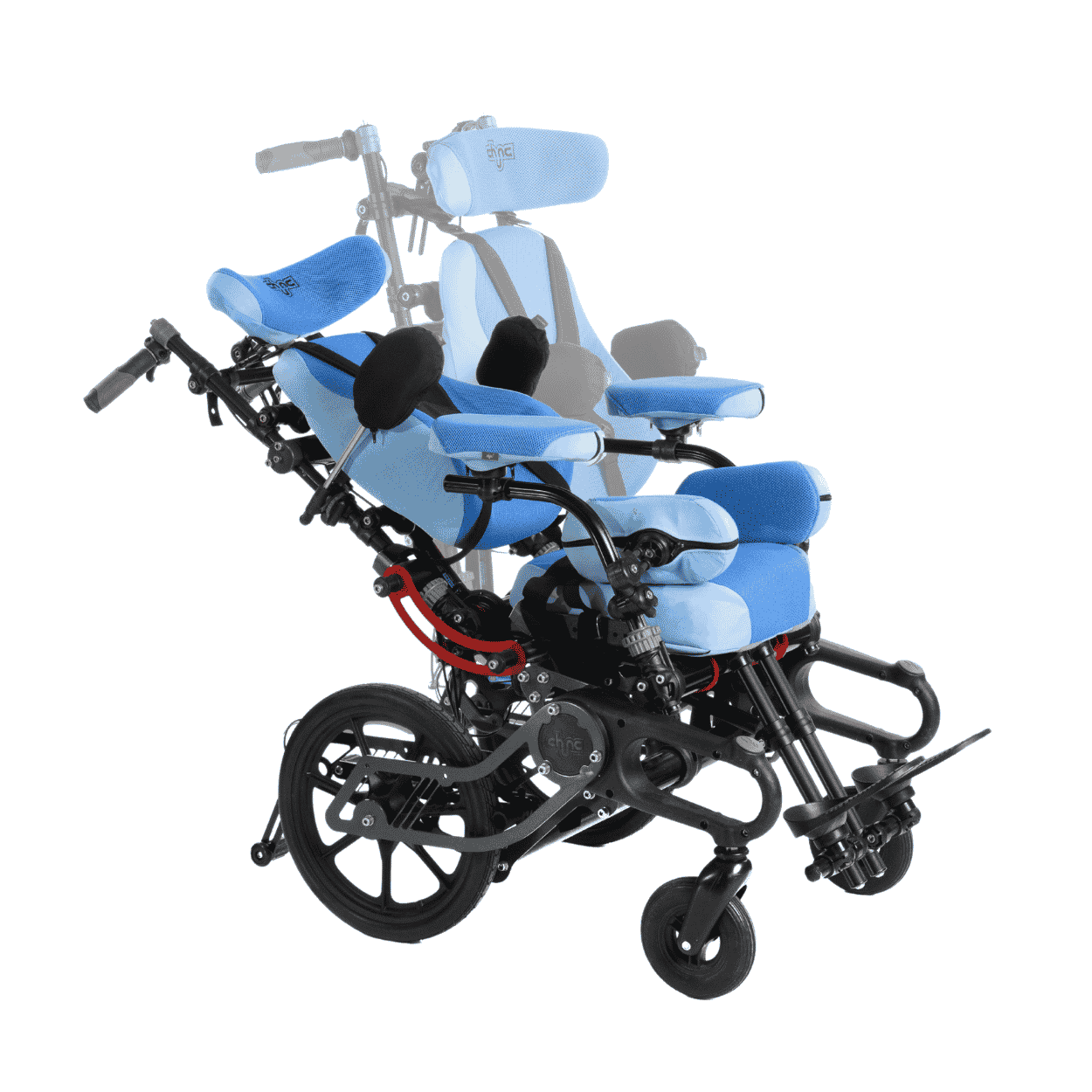
Chunc Recline 160° provides a balanced recline solution, offering effective pressure relief while maintaining postural integrity and functional positioning. Designed for users who require regular rest periods and fatigue management, it supports comfort without compromising established seating set-up or alignment. Available exclusively on the Chunc One wheelchair and Adapt wheelbase across all sizes.
Product successfully added to the Quote List
Compatibility
FAQ's
What is Recline 160° used for?
Recline 160° is designed to provide controlled pressure relief while maintaining postural alignment. It allows users to recline for rest and comfort without significantly disrupting their established seating set-up.
How does Recline 160° support posture?
It maintains a balanced seating position during recline, helping to preserve postural integrity and alignment. This ensures users can rest while still benefiting from consistent support through the wheelchair system.
Who is Recline 160° suitable for?
It is suitable for users who require regular rest periods, experience fatigue during the day, or benefit from controlled changes in position while maintaining a stable and functional posture.
Does reclining affect pressure management?
Reclining helps redistribute pressure, supporting pressure relief while maintaining stability. This can be particularly beneficial for users who need to reduce prolonged pressure without moving out of their wheelchair.
Which wheelchairs is Recline 160° available on?
Recline 160° is available exclusively on the Chunc One wheelchair and Adapt wheelbase across all sizes.
Description
Recline Kit (160°)
Combining pressure care through tilt-in-space with functional repositioning via recline, this configuration delivers a highly effective and stable seating solution.
Recline 160 opens the back angle up to 160°, allowing the user to move into a semi-supine position while keeping all postural supports in place. The backrest moves backwards while the seat remains fixed, opening the hip angle and enabling the user to “lean back” without compromising their established positioning.
This differs from tilt-in-space, where the entire seating system tilts as one unit, maintaining all body angles. When used together, tilt and recline provide complementary benefits—tilt supports pressure redistribution and minimises shear, while recline enables controlled changes in posture and hip angle.
Reclining helps redistribute pressure away from the pelvis and sitting bones and can support users who experience fatigue in upright sitting. It allows the body to settle where independent postural control is limited, offering rest periods without the need for transfers. This can reduce physical demand on carers and improve tolerance for extended periods of use, including community participation.
Tilt-in-space at 45° underpins postural stability and pressure management, with recline adding controlled hip angle adjustment—introducing additional clinical considerations such as shear, which must be managed as part of a complete seating system. Selection of the appropriate configuration should always be guided by an Occupational Therapist or specialist seating assessment to ensure safe and effective clinical outcomes.